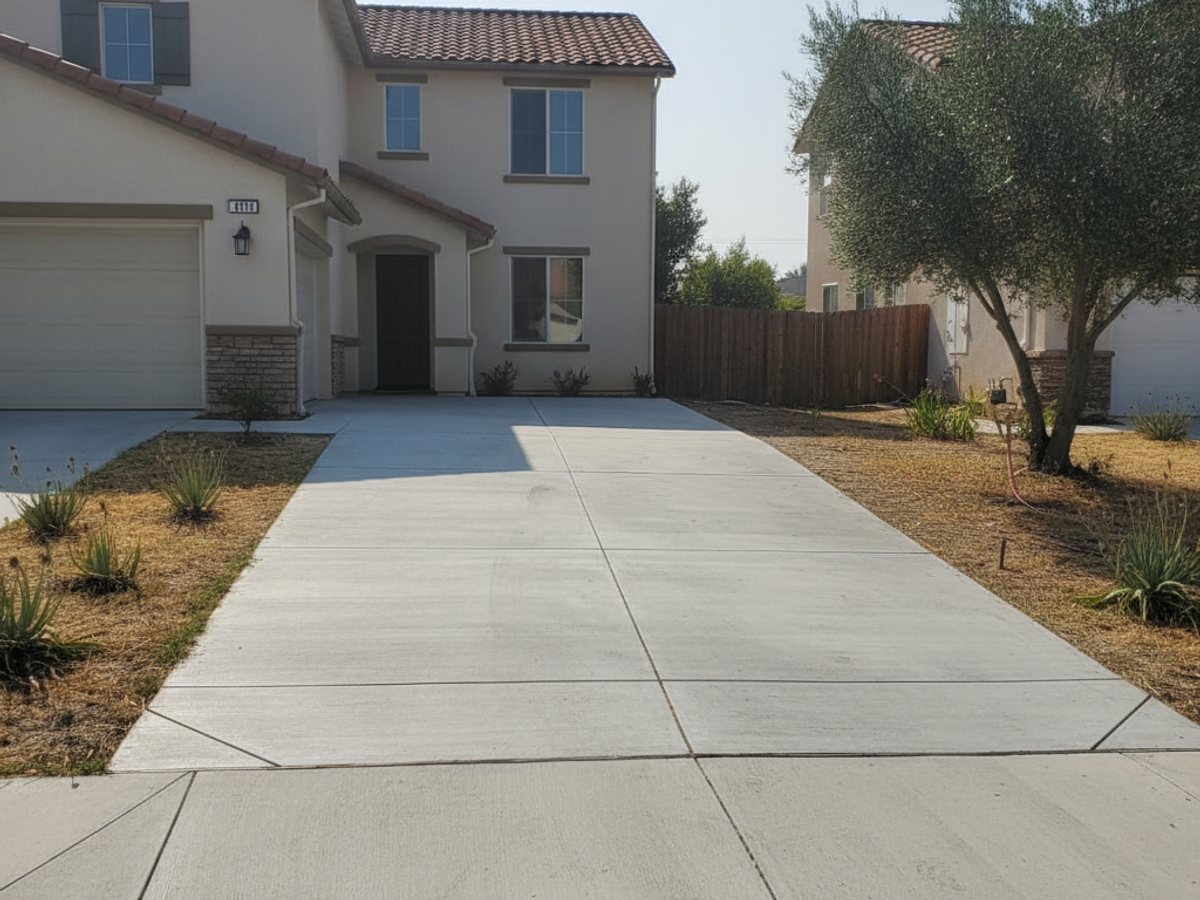
People ask us this a lot, usually right after they've gotten a few bids and are trying to decide when to pull the trigger. In most of the country the answer is simple: wait for spring, stay out of the ground when it's frozen. Los Angeles doesn't give you that problem. We don't get frost here, not in the flatlands anyway, so the calendar question is really about two other things: rain and heat.
Forget frost, this isn't that kind of climate
Contractors in Chicago or Denver plan their whole season around the frost line. Concrete poured into frozen ground, or concrete that freezes before it reaches a few hundred psi, cracks and spalls later. We don't deal with that in the LA basin. Overnight lows in January rarely drop below 45°F even inland, and the ground doesn't freeze at all. So if someone tells you concrete work shuts down here in winter the way it does in the Midwest, that's not true. What actually shuts a job down here is a storm front.
The rainy season is the real limiter
Most of our rain falls between November and March, with December through February usually the wettest stretch. You cannot pour a slab into standing water or saturated subgrade and expect it to perform. Rain on fresh concrete before it's had a chance to set washes cement paste off the surface and leaves it weak and pitted. A hard rain the day before a pour is almost as bad, because wet clay subgrade doesn't compact the way dry subgrade does, and a soft base under a driveway or a patio is how you end up with settling cracks two years later.
That doesn't mean nothing happens in winter. We watch the forecast and schedule pours for the dry windows between storms, which show up regularly even in a wet January. It does mean winter jobs take more slack in the schedule. A driveway that would run five working days in July might run eight in February once you count a rain day and a day waiting for the base to dry back out.
Summer heat brings its own problems
July through September, especially inland in the Valley or out toward Pomona and the Inland Empire, you're dealing with the opposite issue. Concrete sets through a chemical reaction, not by drying out, but heat speeds that reaction up a lot. On a 95°F day with low humidity, a mix that would normally give a finisher 90 minutes of working time might only give 30 or 40 before it starts to stiffen under the trowel. That's flash set, and it's how you end up with cold joints, trowel marks that won't work out, or a surface that's already too stiff to broom finish evenly.
Hot, dry weather also causes plastic shrinkage cracking, those fine surface cracks that show up within hours of the pour, before the concrete has any real strength to resist them. Water in the mix evaporates off the top faster than it can bleed up from below. We handle this by pouring early in the morning in summer, sometimes starting before 6am so the slab is finished before the heat really sets in, and by fogging the surface and getting curing compound down fast instead of leaving it exposed.
The actual sweet spots
If you want the easiest conditions, April through early June and September into October are usually the calmest stretches in LA. The rain has mostly cleared out by April, and the real heat hasn't arrived yet. Late May and June bring the marine layer, what people here call June gloom, and that overcast, mild weather is honestly pretty good for curing. It keeps the surface temperature down without any rain risk, which means a slower, more even set and less chance of shrinkage cracking. September and October, after the worst of the summer heat but before the rain comes back, are the other good window, though it's worth watching for Santa Ana events, which bring hot, bone dry air that can dry a slab out fast even in fall.
Soil matters more than the calendar does
Timing gets a lot of attention, but what's under the slab matters just as much in any month. A lot of the LA basin sits on alluvial soil, sand and silt washed down from the mountains, which generally drains and compacts fine. Plenty of neighborhoods, parts of the Valley especially, sit on heavier clay that swells when it's wet and shrinks when it dries. That movement under a driveway or a foundation slab causes cracking no matter what season you pour in, if the base wasn't compacted right or the moisture wasn't managed. A contractor who knows the area is checking the subgrade on every job, wet season or dry, not trusting the calendar to do that work for them.
Permits and inspections don't slow down for weather
For anything structural, a slab foundation, a retaining wall over a certain height, you're pulling a permit through the local building department, and that process runs on its own timeline regardless of season. Rebar placement typically gets inspected before the pour, and a retaining wall of any real height usually needs an engineer's stamp. Rain can push back inspection scheduling just like it pushes back the pour itself, so a winter permit job can end up with two separate delays stacked on top of each other instead of one. If you're on a corner lot or near a property line, a setback check is common too, and that's worth sorting out before anyone picks a pour date.
What this means for scheduling your job
If you've got flexibility, April, May, September and October give you the fewest headaches. If you have to build in summer, it's still doable, it just takes early starts and a crew that knows how to manage a fast setting mix. If winter is your only option, that's doable too, it just takes a contractor who's watching the forecast closely and won't pour into a soft, saturated base to hit a deadline. We've poured slabs in January and finished patios in August. The timing changes the plan, not whether the job gets done right. If you want to talk through where your project fits into that calendar, Precision Concrete Co can walk you through it.